
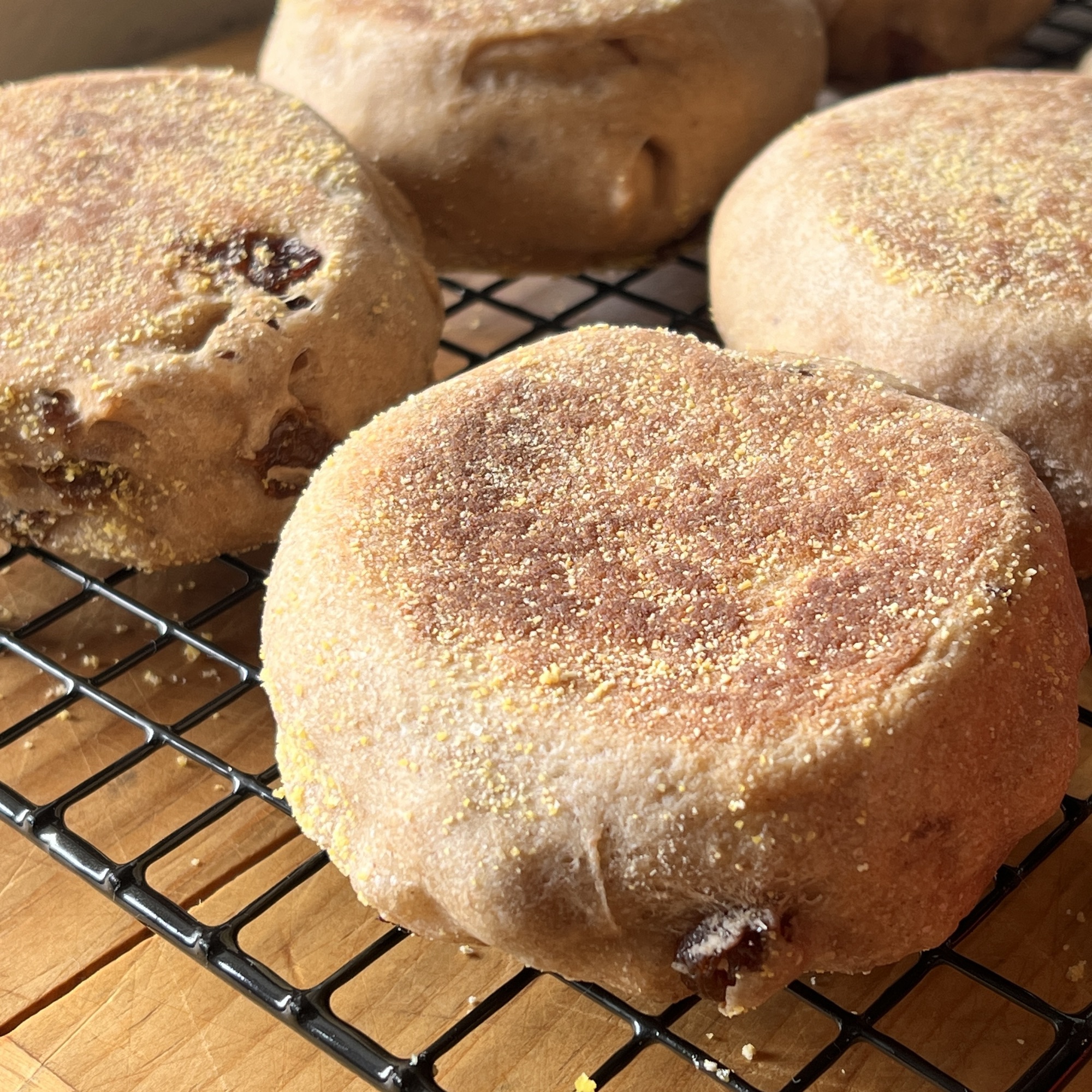
Toast is a breakfast staple, it has to be the most common way to start the day. English muffins take that brekkie basic to the next level with all of those nooks and crannies. Why not take it up a notch with Cinnamon Raisin Bread Machine Sourdough English Muffins? Love raisins? These are sure to be right up your alley.

Bread Machines can make GREAT sourdough!
Bread machines don’t magically create sourdough starters, but they can be a valuable tool in making the sourdough bread baking process more “hands-free”. They can handle kneading, mixing, and proofing the dough. This allows us to make time for other tasks in our daily routine.
This recipe allows you to use your mature starter with the dough cycle function of your bread machine. WITHOUT any added yeast! If you are all about sourdough AND bread machines, keep reading. This recipe is as easy as it gets using the dough cycle!
Breakfast just got a serious upgrade. It’s time to bake your own fluffy, tangy sourdough English muffins with minimal effort, thanks to your handy kitchen gadget. Yes, you heard that right, another sourdough recipe using the bread machine. Minimal fuss and maximum reward. Even better, it’s another flavor beyond the basic. We’re mixing it up with some cinnamon & raisin.
The beauty of this method lies in its simplicity. No long, messy hand-kneading sessions, no finicky shaping and proofing. Just toss a few basic ingredients into your bread machine, press a button, and let the magic happen. Before you know it you will have dough that can go into the fridge to make & bake in the morning.
No rolling, biscuit cutters, no special techniques needed. Just let your bread machine do all the work and wake up the next day to make some fresh English muffins. It’s time to ditch the pre-packaged sourdough imposters, but keep the convenience. This is REAL sourdough, no added vinegars or flavors. If you are like me and never thought you would be making them yourself… then this recipe is for you!
A helpful piece of advice if you are new to making English Muffins. Read through all of the information before getting started. It will help you tremendously to have a good visual.
If you need more information, a sample timeline is provided below. As with any bread machine recipe I always recommend the following:
- Making sure your paddle is in place before getting started.
- Removing your bread pan before adding ingredients.
- Adding ingredients as written in the recipe card below (wet to dry) unless otherwise written in your machines instruction manual.
Want to make a wheat version? Check out my Multigrain Bread Machine Sourdough English Muffins!


What You’ll Need:
Bread Machine- Any size will work because we are not baking in it. We are only using the dough cycle so any 1, 1-1/2, or 2 pound machine will do. If you are new to a bread machine altogether, check out my Bread Machine Master Butter Dough where I give you all my best tips. If you would like another sourdough bread machine recipe, also read my article, The Ultimate Bread Machine Guide to a 100% Sourdough Sandwich Loaf.
Active Starter- I use a slightly lower hydration starter. It is generally on the thicker side, like pancake or waffle batter. Make sure it is active and bubbly before starting. I tend to feed mine the night before and use it early in the morning, roughly 6-8 hours before getting started. This will depend on your starter and environment such as temperature, humidity, etc.
Filtered Water- I don’t recommend using tap water of any kind because of the chlorine, fluoride, etc. can destroy the wild yeast. I always use a bottle of filtered water for both feeding my starter and making bread, so it’s the same here. Using it at room temperature is just fine in warmer months, but if your kitchen is particularly cold, opt for warmer water, no more than 85 – 95°F.
NOTE: You can also swap out the water for whole milk, this can rise a little quicker, or better in my experience.
Vanilla Extract or Vanilla Bean Paste
Butter- Salted or unsalted is fine, just no margarine please.
All-Purpose Flour- Organic unbleached flour is great for sourdough bread making because it has natural wild yeast and beneficial bacteria in it already that encourages a healthy starter and dough. Bleached flours are chemically treated to whiten and remove these vital microorganisms, and can affect the final out come of the bread. A quality Unbleached Bread Flour can also be used, it will likely give you a little bit of a better rise and structure, but I get great results with both.
NOTES: The all-purpose flour I use has a 11.5% gluten content. You can swap out half of the all-purpose for spelt or other wheat flour.
Salt- No iodized, use sea salt or plain table salt.
Sugar- I prefer Brown Sugar, see how I make mine here. Coconut Sugar, White or Cane Sugar will also work well as an equal swap.
Ground Cinnamon
Raisins- Use what you prefer… black, golden, sultanas, even currants. I recommend plumping up the raisins with boiling water for 5 minutes and draining them off well before beginning the dough. This prevents the raisins from absorbing moisture from the other ingredients. These are added just before the first mix/kneading ends and the first rise starts. This prevents them from getting chopped up by the mixing blade. during the knead.
Oil- You will need oil to grease your bowl before the cold fermentation in the fridge. Be careful not to use too much, just enough to coat the surface of the bowl and the dough, you shouldn’t see any “puddles” of oil. A little extra oil will also come in handy to rub into your hands to release the dough from the bread machine pan. That will prevent it from sticking to you. It will also be needed for cooking. I prefer Avocado or Coconut Oil.
Large Glass or Plastic Bowl- For the cold fermentation.
Medium Ground Cornmeal– This is not used in the dough, it is to prevent sticking and provide that same classic crunch that we are all familiar with in the pre-packaged stuff.
Large Sheet Pan for Baking– I use a standard “half sheet” size.
Parchment Paper
Electric Griddle OR Large Skillet- The larger electric griddles should fit all 8 muffins at once. I prefer the electric griddle because it gives me better control of the temperature, if using a skillet on the stove adjust the temperature as needed.
Cooling Rack
Digital Scale- optional. Using a scale allows me to use less dishes by carefully measuring into the bread pan that is resting on my scale. With practice, this has made things easier, faster, and less dishes! Aside from that, there are some important points to mention. Volume measurements can be affected by factors like how ingredients are packed or scooped. Weight measurements provide accuracy, allowing you to replicate your sourdough success more reliably.

Tips for making THE BEST English Muffins
Use plenty of cornmeal to coat the sheet pan or parchment paper lined pan. This prevents your nice shaped muffins from sticking. When the dough is chilled it is less sticky, but as it warms up and bulk ferments, it softens. The cornmeal helps you lift the dough off the paper. You can lightly dust the tops if you want cornmeal on both sides.
Do your best to not bring all that cornmeal onto the griddle. Some will come along, you do need it, but not too much of it or it will burn.
Pre-heat your oven and your griddle skillet at the same time. These are very easy and once baking day comes the whole process goes from griddle to oven in minutes so it is best to be ready!
Have your cooling racks nearby. Same as above, this goes quickly and you’ll want these muffins cooling so you can split them open and slather them with butter. They need to hang out for a few minutes because they will be very hot coming out of the oven.
Use a fork to split open for those extra nooks and crannies! You can slice them open, but using a fork to poke around the edge and split it open is the best way in my opinion. I like to do this to all of my muffins before I store them away. Whether they go into the freezer or the fridge… it makes mornings so much easier to just pull them open, no knife needed.


TIMELINE Example:
If you don’t start your day at 7 am, no worries! Just scale this timeline to suit your day better. Write it out and stick it to your fridge. Make notes & adjustments if you need to, this is just a step-by step guide that I use to make my own English Muffins!
Before Bed: Feed your starter as you normally do, making sure you have more than 1 cup or 240 grams, you’ll need some leftover to keep it going.
NOTE: If you have another method for getting your starter active for baking, do that.
7:00 AM-(Day 1) Prepare your raisins as directed in the recipe card below. Add the ingredients as listed. Start your bread machine on the dough cycle.
Add the raisins just before the first mix/kneading ends and the first rise starts.
Bulk fermentation begins when kneading ends (1 hour 10 minutes remaining), set a timer for the remainder of the time left on the machine.
8:30 AM The bread machine finishes. Check in on the dough. It should be nice & smooth. Continue to bulk ferment in the machine as is for an additional 3-6 hours. This will depend on the temperature & environment of your kitchen and THE activity of your starter. Check in on it after about 2 hours & adjust the bulk fermentation time accordingly. Set a timer.
11:30 AM (up to about 2:30 PM) Grease a large glass or plastic bowl with a neutral oil. Then using oiled hands, remove the dough from the machine and place into your bowl. Lightly oil the surface of the dough. Cover with plastic wrap and refrigerate until the morning.
6:00 AM-(Day 2) Prepare your baking sheet with parchment paper and a light dusting of cornmeal.
On a silicone pastry mat or a clean countertop, divide the chilled dough into 8 pieces as shown in the photos below.
Shape (folding, smooth side up) into buns, pinching and sealing the seams closed at the bottom. Gently flatten out to a patty shape or like a hamburger bun with your fingers and place on the cornmeal/parchment prepared baking sheet.
Cover with a lightweight towel and proof in a warm location (about 75°F-24°C) for 1-2 hours. If you have a cooler kitchen, the oven with the light on is a good spot, put a note on the oven if you need a reminder not to turn it on.
7-8:00 AM Once they have increased in size & puffed up a bit. Pre-heat your oven to 350°F/180°C/Gas Mark 4 (remove the muffins if they are proving in there).
If you are using an electric griddle, pre-heat it to 300°F/150°C-325°F/165°C. If using a skillet, pre-heat to medium-low or medium.
Just before cooking, melt coconut oil or grease the griddle with a neutral oil. Carefully cook all 8 muffins for 3-4 minutes per side. The goal is lightly browned, toasted.
Reduce the heat as needed on your griddle/stove. As they are cooking, prepare the baking sheet with a fresh piece of parchment paper.
BAKING TIME: When they are done on the griddle, transfer to the plain parchment lined baking sheet and bake in the oven for about 15-20 minutes, until the internal temperature reaches 205-210°F.
FINISHING LINE: Let them cool for about 10 minutes, then split open by poking with a fork all around the edges and splitting open for the ultimate nooks & crannies experience. Toast them or serve as is. Enjoy!
The times and directions provided can be used as is, OR adapted to fit your schedule and climate of your kitchen. Take notes of any changes you may need to make and add it your this or your own timelines.
Sourdough is about practice and reading the dough. You may need to bake several batches before you have that ah ha! moment. Give yourself grace, practice makes progress. Even with a great recipe, your starter and environment is unique. Go with what works for you!

Need another TIMELINE example?
Take the dough straight to the fridge AFTER the machine is done. The average time on a bread machine dough cycle runs for 1 hour 30 minutes. As soon as your dough cycle ends, place it in a greased bowl and cover it well.
The next day (up to 24 hours) divide and shape the dough onto the parchment lined/cornmeal prepared pan. Bulk ferment in a warm place for 3-6 hours. Again, this time will vary depending on your environment, temperature, humidity, and the activity of your starter.
Follow the remaining steps as written above for cooking and baking. And there you have it, two simplified timelines to get you to some homemade English muffins.
One important note to make about this particular timeline… the surface of the dough can dry out even if it is covered by a light towel. If that happens, I spray them with water right before cooking on the griddle and I get great results.


How to Store & Freeze:
Storing at room temperature
- Cool completely: Let your freshly baked muffins cool completely on a wire rack before storing. Any trapped heat or moisture can lead to spoilage.
- Shelf life: Stored properly, your muffins will last for up to 3 days at room temperature, up to a week refrigerated.
Freezing for longer storage
- Cool and pre-freeze: Let the muffins cool completely, then pre-freeze them on a baking sheet for at least 1 hour to firm them up. This prevents them from sticking together when frozen.
- Transfer to freezer bags: Place them in a freezer-safe zip-lock bag. Squeeze out as much air as possible to prevent freezer burn.
- Label and freeze: Label the bag with the date and freeze for up to 3 months.
Tips for thawing and reheating
- Thaw overnight: For the best texture, thaw your muffins overnight in the refrigerator. You can also thaw them at room temperature for a few hours.
- Reheating options: Toasted is the classic way to enjoy frozen English muffins, but you can also microwave them for a quicker option. Just be careful not to overcook them or they will become tough.
- Refresh on the stovetop: For a crispier texture, heat them briefly on a lightly oiled skillet over medium heat until warmed through.
Bonus tip! If you plan to freeze some of your muffins and keep others at room temperature, it’s helpful to freeze the ones you won’t eat first. This ensures that you enjoy the freshest muffins first while having frozen backups handy.
By following these tips, you can extend the shelf life of your homemade sourdough English muffins and enjoy them any time you need a delicious toastie!

More than just plain toasties!
Toasted and Spread: Toast your English muffin lightly and spread with butter, cream cheese, or ricotta cheese. Drizzle with honey or maple syrup for added sweetness.
Fruit & Yogurt Parfait: Toast your English muffin, cut it into squares, and layer them with yogurt, fresh fruit (berries, bananas, or other fruits), and a drizzle of honey for a healthy breakfast.
Twisted French Toast: Dip your English muffin halves in a cinnamon-infused egg mixture and fry until golden brown. Drizzle with maple syrup and enjoy!
Warm with Ice Cream: Toast your English muffin and top it with a scoop of vanilla ice cream, whipped cream, and a drizzle of caramel sauce for a decadent dessert.
Fruit & Nut Butter: Toast your English muffin and spread with nut butter (peanut butter, almond butter, or cashew butter) and top with fresh fruit slices for a quick snack.
Love Cinnamon? For a touch of extra flavor, brush your English muffin with melted butter and sprinkle with cinnamon sugar after toasting.
Looking for more ways to make SOURDOUGH recipes? Check these out!
The Easiest Sourdough Drop Biscuits
Overnight Sourdough Belgian Waffles
Bread Machine Sourdough Liège Waffles
The Ultimate Bread Machine Guide to a 100% Sourdough Sandwich Loaf
Multigrain Bread Machine Sourdough English Muffins
Easy Bread Machine Sourdough English Muffins


You can also find me on Facebook & Pinterest!

Subscribe today for FREE weekly recipes sent directly to your inbox!
Be sure to check your email to confirm.

Cinnamon Raisin Bread Machine Sourdough English Muffins

Equipment
- 1 1, 1.5, or 2 lb Bread Machine
- 1 digital scale, optional
- 1 Electric Griddle or Large Skillet
- 1-2 large sheet pans I use a standard "half sheet" pan
- 1 Cooling Rack optional
Ingredients
- 3/4 cup filtered water or whole milk, room temperature, SEE NOTES.
- 1 teaspoon vanilla extract or vanilla bean paste
- 1 cup active sourdough starter, See Notes
- 2 tablespoons butter or neutral oil, room temperature
- 2-3/4 cup all-purpose flour or bread flour, See Notes
- 1-1/2 teaspoons sea salt, or table salt, no iodized.
- 3 tablespoons brown sugar, or white, cane, or coconut sugar can be substituted.
- 2 teaspoons ground cinnamon
Add LAST
- 1/2 cup raisins, soaked, drained, cooled. Add about 5 minutes before the first mix/knead ends.
For Cooking: Do not add to the machine
- 1/4-1/3 cup medium ground cornmeal, for preparing the baking sheet and preventing sticking.
- neutral oil, for cooking

Instructions
The Night Before:
- Feed your starter as you normally do, making sure you have more than 1 cup or 240 grams, you'll need some leftover to keep it going. NOTE: If you have another method for getting your starter active for baking, do that. (See the sample timeline in the article above).
Day 1:
- Make sure your paddle is in place before getting started. Removing the bread pan before adding ingredients.
- Prepare your raisins by soaking in boiling water for 5 minutes and setting aside to drain and cool.

- Add the ingredients as listed directed by your machines user manual. Start your bread machine on the dough cycle. At about 5 minutes before the first mix/knead stops and the first rise begins, add the prepared raisins.
- Bulk fermentation begins when kneading ends (1 hour 10 minutes remaining), set a timer for the remainder of the time left on the machine.
- When the bread machine finishes, check in on the dough. It should be nice & smooth and the raisins well incorporated.Continue to bulk ferment in the machine as is for an additional 3-6 hours. This will depend on the temperature & environment of your kitchen AND the activity of your starter. Set a timer… check in on it after 2 hours & adjust the bulk fermentation time accordingly.
- Grease a large glass or plastic bowl with a neutral oil. Then using oiled hands, remove the dough from the machine and place into your bowl. Lightly oil the surface of the dough. Cover with plastic wrap and refrigerate until the morning or up to 24 hours.

Day 2:
- Prepare your baking sheet with parchment paper and a light dusting of cornmeal about 1/4-1/3 cup.
- On a silicone pastry mat or a clean countertop, divide the chilled dough into 8 pieces as shown in the photos. Shape (folding, smooth side up) into buns, pinching and sealing the seams closed at the bottom. Gently flatten out to a patty shape or like a hamburger bun with your fingers and place on the cornmeal/parchment prepared baking sheet.Cover with a lightweight towel and proof in a warm location (about 75°F-24°C) for 1-2 hours. If you have a cooler kitchen, the oven with the light on is a good spot, put a note on the oven if you need a reminder not to turn it on.NOTE: You can lightly dust the tops if you want cornmeal on both sides.

- Once they have increased in size & puffed up a bit. Pre-heat your oven to 350°F/180°C/Gas Mark 4 (remove the muffins if they are proving in there). If you are using an electric griddle, pre-heat it to 300°F/150°C-325°F/165°C. If using a skillet, pre-heat to medium-low or medium.

- Just before cooking, melt coconut oil or grease the griddle with a neutral oil. Carefully cook all 8 muffins for 3-4 minutes per side. Reduce the heat as needed. The goal is lightly browned, toasted. As they are cooking, prepare the baking sheet with a fresh piece of parchment paper.

- BAKING TIME: When they are done on the griddle, transfer to the plain parchment lined baking sheet and bake in the oven for about 15-20 minutes, until the internal temperature reaches 205-210°F.

- Let them cool for about 10 minutes, then split open by poking with a fork all around the edges and splitting open for the ultimate nooks & crannies experience. Toast them or serve as is. Enjoy!

- Store in an air-tight container at room temperature for 3 days, refrigerate for up to one week or freeze for 3 months.


Leave a Reply